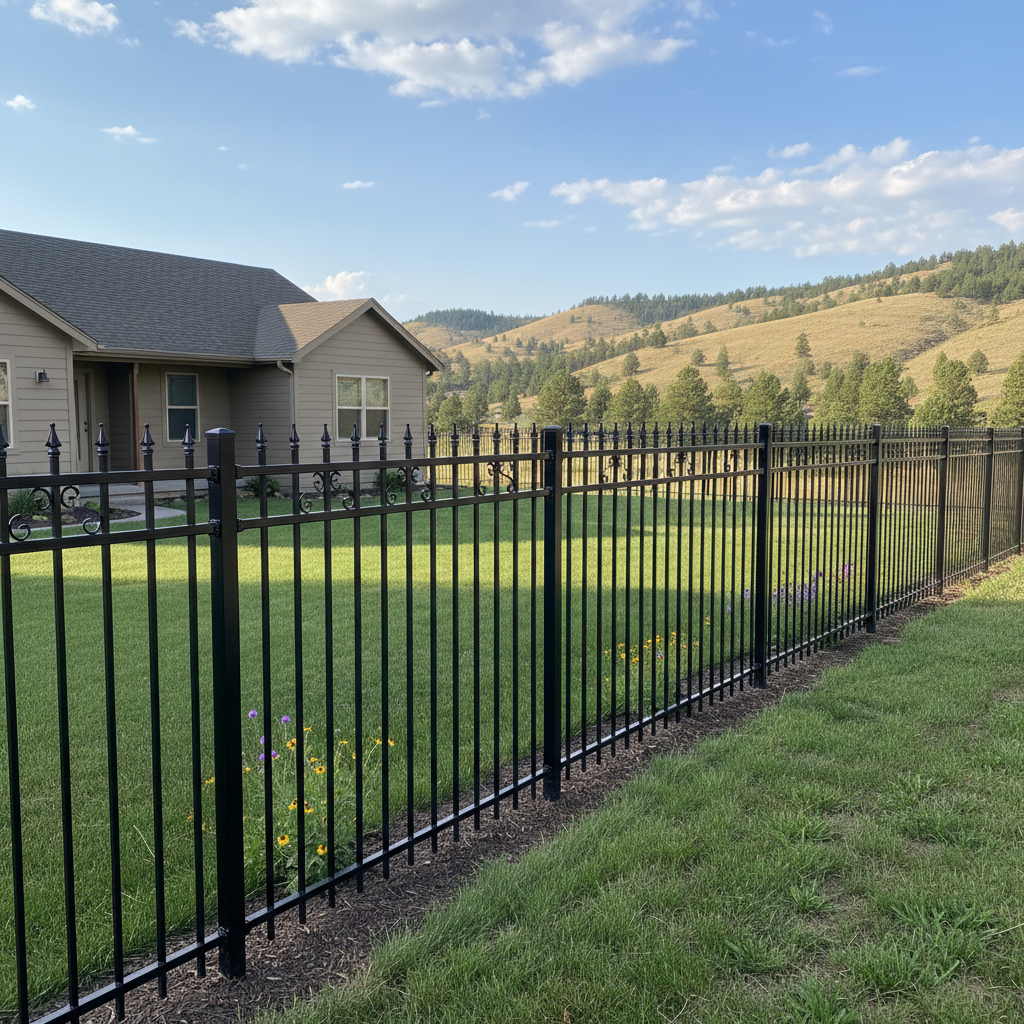
What's the Deal with Ornamental Iron Fence Pricing?
So, you're thinking about an ornamental iron fence for your Rapid City property. Great choice, honestly. It adds a ton of curb appeal, security, and just looks sharp. But let's be real, the first thing on most folks' minds is, "How much is this going to set me back?" It's not like buying a gallon of milk where the price is right there on the shelf. There are a lot of moving parts, and that's what I want to clear up for you today.
I've been installing these fences around the Black Hills for years, from the historic homes downtown to the newer developments out near Box Elder. Every job is a bit different, but there are some common factors that always come into play when we're figuring out a price.
What Drives the Cost Up (or Down)?
You'd think a fence is a fence, but with ornamental iron, there's a lot more going on than just digging holes and setting posts. Here's what we look at:
- Material Quality and Style: This is a big one. Are we talking standard pre-fabricated panels, or custom-designed, hand-forged sections? Thicker gauge steel costs more. Intricate scrollwork, finials, and decorative elements add to the fabrication time and material. A simple flat-top design will always be less expensive than something with elaborate spear points and rings.
- Height and Length: This one's pretty obvious, right? More fence means more material and more labor. A 4-foot tall fence is cheaper per linear foot than a 6-foot tall one. Most residential ornamental iron fences around here land between 4 and 6 feet high.
- Gates: Gates are almost always the most expensive part of an iron fence project, especially if you want an automatic opener. A simple 4-foot wide walk gate might add $800-$1,500 to the project. A double-driveway gate, say 12-16 feet wide, can easily run $3,000-$6,000 just for the gate itself, not including automation. Add a heavy-duty opener with keypads and safety sensors, and you're looking at another $2,500-$5,000.
- Site Conditions: This is where Rapid City can get interesting. We've got a lot of rocky soil, especially up in the foothills. Digging post holes through solid rock takes more time, specialized equipment, and therefore, costs more. If your yard slopes significantly, that also adds complexity because panels need to be custom-cut or stepped, which means more labor. Easy, flat ground? Cheaper. Steep, rocky terrain? More expensive.
- Installation Method: Are we setting posts in concrete, or are we bolting to an existing concrete wall or curb? Bolting is often quicker but requires specific hardware. Concrete footings are standard for stability.
- Finish: Most ornamental iron fences are powder-coated. This is a durable finish that protects against our harsh winters and hot summers. Different colors are usually standard, but specialized finishes or multi-coat systems can add a bit to the cost.
So, What's the Typical Price Range?
Okay, let's get down to some numbers. Remember, these are averages for installed fences in our area. You'll find outliers on both ends, but this should give you a solid ballpark.
- Basic Residential Ornamental Iron Fence (4-5 ft tall, standard design, powder-coated, installed): You're usually looking at around $60 to $95 per linear foot. This would be for a straightforward installation on relatively flat ground with no major rock removal.
- Mid-Range Residential Ornamental Iron Fence (5-6 ft tall, some decorative elements, installed): Expect to pay closer to $95 to $130 per linear foot. This might include a few more intricate details or slightly more challenging terrain.
- High-End/Custom Ornamental Iron Fence (6 ft+, intricate designs, custom fabrication, challenging site): This can easily jump to $130 to $200+ per linear foot. If you're getting truly custom work, unique patterns, or have a very difficult installation site, the sky's the limit, but this gives you a starting point.
These ranges are for the fence itself. Don't forget to factor in gates separately, as I mentioned above.
What Should a Good Quote Include?
When Alpha Fencing Co. gives you a quote, we make sure it's clear. A good quote should always break down:
- Linear footage of fencing: How much fence are we actually installing?
- Type and style of fence: Specifics on the material, height, and design.
- Number and type of gates: Walk gates, drive gates, automatic openers, etc.
- Preparation work: Any necessary clearing, grading, or rock removal.
- Installation labor: The cost of getting it all put in properly.
- Materials: All the steel, posts, hardware, concrete, and finishing.
- Permits: Who is responsible for pulling them (usually the homeowner, but a good contractor can guide you).
- Warranty information: What's covered and for how long.
- Total cost: The bottom line, with no hidden fees.
How to Avoid Overpaying
Nobody wants to get ripped off. Here's my advice:
- Get Multiple Quotes: This is Fence 101. Talk to at least three reputable contractors. Don't just go with the cheapest; compare what's included.
- Be Specific About What You Want: The more details you provide upfront (height, style, number of gates, etc.), the more accurate your quotes will be. If you change your mind halfway through, expect the price to change too.
- Ask About Hidden Costs: Specifically ask about things like rock removal, disposal fees, or permit application help. Make sure it's all in writing.
- Check References and Reviews: A good contractor will have happy customers. See what others in Rapid City say about their experience.
- Understand the Warranty: A quality ornamental iron fence should last decades. Make sure the installation and materials are backed up.
An ornamental iron fence is a significant investment, but it's one that pays off in durability, beauty, and property value. Do your homework, ask the right questions, and you'll end up with a fence you'll love for years.